1. Why coffee shops need to rethink how they choose matcha
As prices rise and supply tightens, traceability is becoming essential for coffee shops and roasters choosing matcha.

If you run a coffee shop or roastery, you may already be feeling it: the matcha you bought last year is becoming harder to source, and the prices you were used to are beginning to shift. For many cafés, matcha is no longer a niche menu item. It has become a meaningful part of the menu — and in some cases, a significant part of revenue.
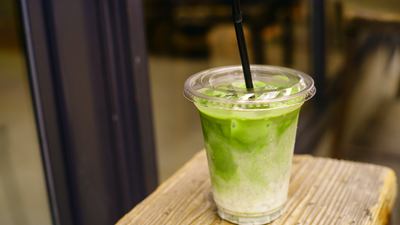
 Matcha lattes are now a core menu item — and a sourcing decision.
Many buyers still rely on words like “ceremonial grade,” “premium,” or “Japanese matcha” when making purchasing decisions. These labels may have felt sufficient in a stable market, but as conditions change, they are no longer enough.
Coffee professionals already understand this problem. In specialty coffee, buyers rarely choose a lot based only on country of origin or price tier. Now, matcha requires the same kind of attention — but with its own set of questions.
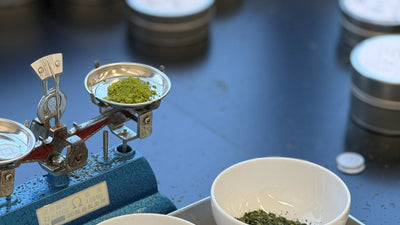
 The same word, “matcha,” can mean very different powders — colour and grade differ.
Price and grade names are no longer enough
For coffee shops and roasters, the question is becoming more urgent: how should we choose matcha for our menu today?
In the past, labels such as “Japanese matcha” or “ceremonial grade” may have felt like enough information. But the market is tightening. A higher-priced matcha may reflect carefully grown tencha, precise harvest timing, skilled processing, and slow milling. Or it may simply reflect a brand premium that adds little value to the cup.
Likewise, a lower-priced matcha is not automatically a poor choice, especially for certain milk-based drinks. But without origin information, buyers have no way to evaluate what they are actually getting.
“Terms like ‘ceremonial grade’ are not standardised and do not tell you where the matcha came from, how it was grown, or who produced it.”
“Japanese matcha” is only the beginning of the conversation
For many buyers, “Japanese matcha” sounds like a strong quality indicator. In many cases, Japanese origin does matter. Japan’s regulated cultivation practices and deep processing traditions produce matcha that differs meaningfully from matcha produced elsewhere.
But “Japanese” alone does not tell buyers enough. Where in Japan was it produced? Was it made from tencha? When was it harvested? Who grew it? These questions matter because matcha is not simply a finished green powder. The region, producer, cultivar, harvest timing, shading method, and milling process all influence the flavour, colour, texture, and stability of the final product.
 Matcha is an agricultural product with a specific origin — here, Shizuoka.
Coffee professionals already know how to read origin
Coffee shops and roasters are well positioned to understand matcha because they already know how to evaluate agricultural products based on provenance, process, and purpose. This mindset is directly relevant to matcha. But matcha requires a different set of questions.
In coffee, a roaster can often express the potential of green coffee through roasting. With matcha, much of the final quality is determined before milling. This makes sourcing decisions more consequential, not less.
Choosing matcha for the menu, not just for the label
For coffee shops, matcha is not only a purchasing decision. It is a menu decision. A matcha may taste impressive when prepared with water, but not perform well in milk. Another may be less delicate when tasted straight, but deliver consistent colour and body in a latte at scale.
For a latte, buyers may need to consider whether the flavour stands up to milk, whether the colour remains vivid, whether the powder disperses cleanly, and whether the cost allows for a reasonable margin. For a premium straight matcha service, the priorities may be different: sweetness, umami, texture, aroma, finish, origin story.
 Traceability connects to people — the producers behind the tea.
The best matcha is the one whose value can be explained
For coffee shops and roasters, the question is no longer simply: which matcha is affordable? Nor is it: which matcha has the best label? The question is: can we explain why this matcha is on our menu?
If the answer is yes, buyers can make better decisions. That might mean choosing a high-grade single origin matcha for a specialty straight preparation, and a different, more functional matcha for milk-based drinks at volume.
In a rising market, the cheapest matcha is not always the best choice. But neither is the most expensive. The best choice is the one that fits the application, can be sourced reliably, and whose value can be communicated to the team and to customers.
For coffee shops, this matters not only for purchasing, but also for service. If a barista can explain where a matcha comes from and why it was chosen, that is a conversation worth having with the customer. As prices rise and supply tightens, traceability is no longer optional. It is becoming the foundation for choosing matcha in a professional setting.